

Think composting isn’t possible in an apartment? Think again! Worm composting in your apartment is surprisingly easy and nearly odorless.
These tiny red wigglers recycle kitchen scraps and paper into worm castings and tea, perfect for houseplants and indoor gardens. It’s sustainable, space-friendly, and surprisingly fun to try at home.
Worm Composting In Your Apartment
What is worm composting?
The fancy scientific word for worm composting is vermicomposting. It uses a specialized worm called Eisenia Fetida but most folks just call them red wigglers.
They are not the same as the common earthworm because their digestive system has evolved to turn kitchen scraps, plant trimmings, paper, and most other organic materials into worm castings or worm doo.
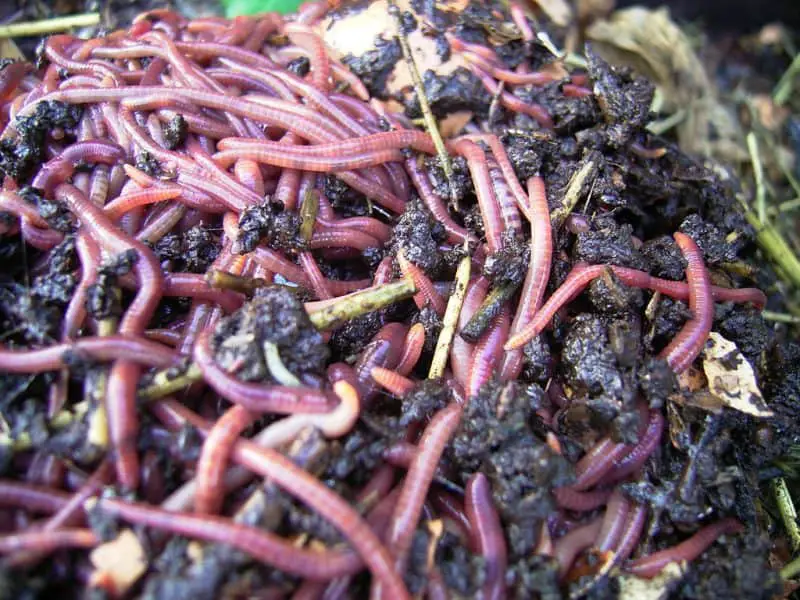
This worm needs an airy environment to survive. It can eat a lot of waste every day and it can multiply quickly even in a small space which makes it a perfect candidate for a worm bin.
Don’t go out and try to dig up worms from your garden they will not be the right kind. However, if you live on a farm or have access to a manure pile you may be able to find some.
I really recommend you buy them from a reputable worm farm to make sure they are disease and pest free.
You should always be careful about what you bring into your apartment from outside. Inside there are no environmental pressures or predators for bugs like mites or aphids and they can quickly infest your healthy plants.
Worm Composting Vs Garden Composting
Making compost in the garden is hot composting. As things compost they give off a lot of heat. Mostly this process is done with bacteria and not worms. To do it right the carbon to nitrogen ratio of the materials has to be right, moisture and air levels also have to be right for the bacteria to grow and feed.
The heat produced kills weed seeds and would kill any worms too. It can be fast or slow depending a lot on outdoor temperatures. At best it can be done in about 6 to 8 weeks. But if you live in an apartment or condo conventional composting probably won’t work for you.
Bring In The Composting Worms
Worm composting is a cold composting process. It does not give off heat like regular composting. The carbon-to-nitrogen ratio is not that critical. Instead of generating heat, vermicomposting relies on worms and other naturally occurring organisms.
It is slower than conventional composting and will probably take 6 months, and because there is no heat, it won’t kill weed seeds. Even though it takes longer, it will produce worm tea much sooner than that. You can dilute it and water your plants with it.
Why Should I Worm Compost?
Most of our food waste ends up in landfills. When this food breaks down it produces methane gas. Methane is a greenhouse gas linked to global warming and is 25 times more dangerous for trapping heat than CO2.
Worm composting recycles our food waste. Compared to conventional composting methods, it is much easier. It doesn’t need to be turned, and you don’t have to worry about C to N ratios or moisture levels.
A worm farm is also perfect for apartment or condo dwellers who dont have a place for conventional garden compost piles. More info in my article Why Compost At Home? The Secret Of Great Gardeners
How Do You Start A Worm Farm?
Obviously, you’re going to need worms and a place to put them. Red wigglers are incredibly adaptable little creatures but you will need to give them a home.
They are not fussy, but they need air. They can be kept in Rubbermaid tubs or 5-gallon buckets if you drill enough holes in them.
They don’t like light, so if whatever you keep them in has a tight fitting lid you should not have a problem with them escaping.
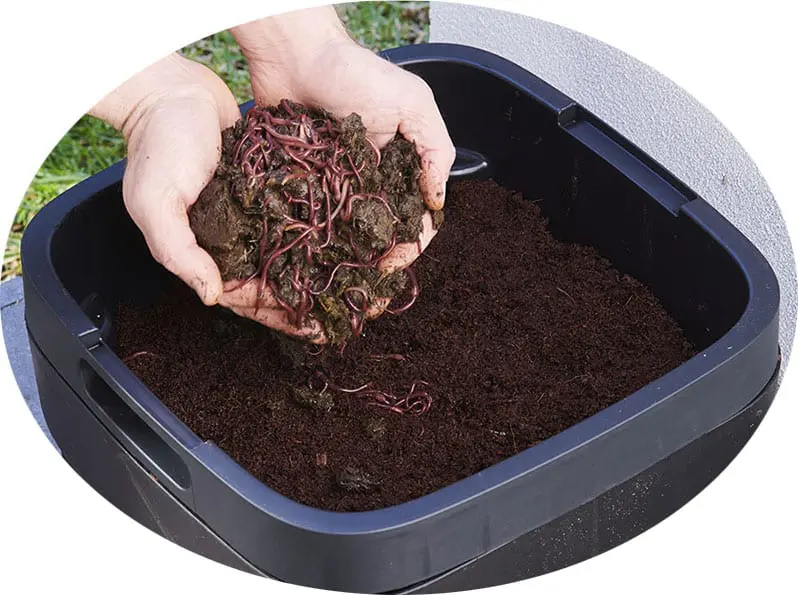
You will need to add bedding to your tote or bucket. The worms will live in the bedding and come to the top to feed on the scraps you feed them. Then they go back down in the bedding.
I recommend getting some coco to use for bedding. I like bricks because they are easier to handle. They are easy to use, just soak them in water and they expand. You can also add shredded paper and cardboard to the bedding.
Worms do well at room temperature. If it gets too hot they can die. They are in a confined space and can only go so far down unlike outdoors where they can go deeper.
Likewise, if it gets cold, they will slow down, and if it gets below freezing, they may die.
But since you are worm composting in your apartment, this shouldn’t really be a problem. Generally, between 55 and 80 degrees will keep them happy. But they will eat and reproduce faster at the higher end.
Worms can eat about half their weight in food per day. So if you start out with 1/2 lb of worms, they can eat a 1/4 lb of food per day.
Gradually, as they increase in numbers and as the size of your community grows, they will be able to eat more. They multiply fast too.
What Not To Put In Your Worm Composting Bin
Not everything should go into your worm composting bin. Things like meat, citrus, onions, dairy foods, mayonnaise, or oils should be avoided.
Grease or oil could coat your worms and cause them to suffocate. In general, really acidic or spicy things should be avoided.
The good news is that all these things can go in a bokashi composter, and they are also perfect for apartments. Bokashi Composting Made Easy
DIY Worm Farms
It is easy to build your own worm farm and there are lots of how to videos on YouTube. Here is a good one on building a worm bin with totes. You can use 5-gallon buckets too, but I think the totes will work better in the long run.
Buy A Worm Composter Ready To Go
If DIY worm composters are not your cup of tea there are ready made worm farms and they can offer features hard to duplicate at home.
Best Worm Composter – Worm Factory 360
It is not often that one product dominates a market but the Worm Factory 360 has done just that and is undoubtedly the best worm composter out there.

The Worm Factory 360 Worm Composter is available as a 4 tray model. The 4 tray model is expandable up to 6 trays.
The Worm Factory 360 has a 5 year limited warranty and is made in USA.
The Worm Factory has over 1000 reviews and a 4.4 out of 5 star rating making it the best worm composting bin around.
It’s hard to argue with that kind of success and it comes with free shipping. Free is good and hard to argue with too!
Worm composting is easy, odorless and the worms will even eat your junk mail! Everything you need to get started is included except the worms, which you need to buy separately.
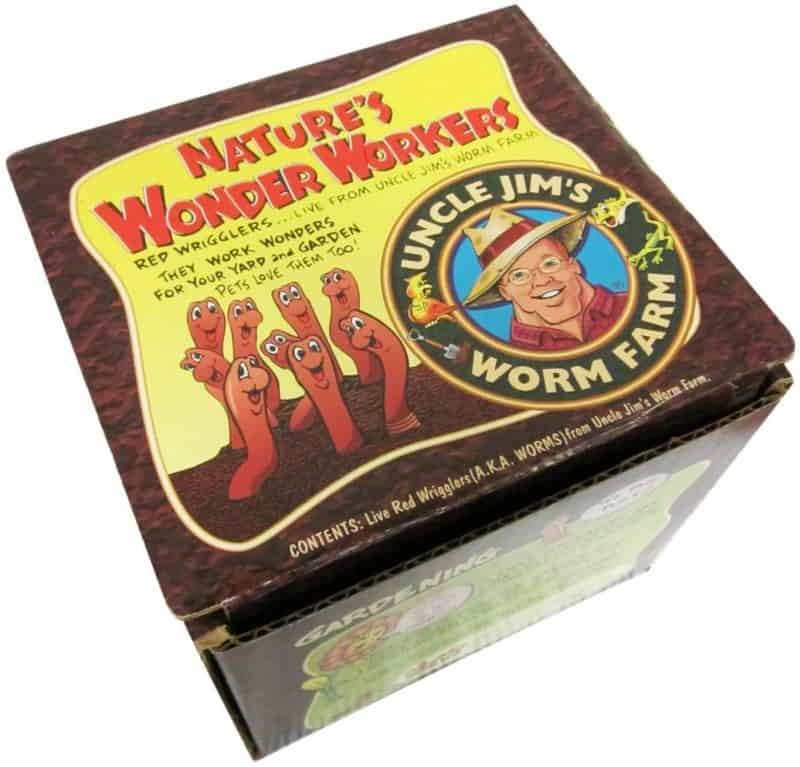
I recommend buying your red wrigglers from Uncle Jim
The most important part of keeping a worm composting bin is keeping it from getting too cold or too hot. Other than that you just add kitchen waste and rotate the trays It takes only a few minutes a week to care for and there’s an instructional video included so you can’t go wrong.
See the Worm Factory 360On Amazon And Read The Customer Reviews
Easy Worm Composting in Your Apartment — FAQs
Can I really worm-compost in an apartment without smells?
Yes. With proper bedding, drainage, and feeding, a worm bin smells earthy. Avoid over-watering and over-feeding to keep odors away.
Which worms should I buy?
Use red wigglers (Eisenia fetida) or red trout worms (Eisenia andrei). Do not use common earthworms—they don’t thrive in bins.
What kind of bin works best indoors?
Vented, stackable trays (e.g., multi-tier bins) are compact and low-mess. DIY totes or 5-gallon buckets also work—drill air/drain holes and use a tight lid to block light.
What bedding should I use?
Moist (wrung-out sponge) coco coir mixed with shredded paper/cardboard and a handful of dried leaves. Add a small amount of mineral grit (crushed eggshells).
What can I feed my worms?
Fruit & veg scraps, coffee grounds/filters, tea leaves, shredded paper/cardboard, and plant trimmings. Chop scraps small for faster processing.
What should I avoid adding?
Grease/oil, large amounts of citrus or onions, spicy/salty foods, dairy, and meat. These can smell, attract pests, or stress the worms.
How much and how often do I feed?
Start light—about 25–50% of worm body weight per day (e.g., 0.25 lb food for 0.5 lb worms). Bury food under bedding; add more only when prior feed is mostly gone.
What temperature and moisture do worms need?
Keep 55–80°F (13–27°C). Bedding should feel like a wrung-out sponge—moist but not dripping. Add dry bedding if wet; mist lightly if dry.
How long until I get finished castings?
Expect 2–4 months for a new bin to produce harvestable castings; steady output increases as the colony grows.
How do I harvest castings in a small space?
Use tray migration: add fresh bedding/food to an upper tray and let worms move up, then remove finished castings below. For totes, push contents to one side and feed the other, then scoop finished material.
What about the liquid—worm tea or leachate?
Liquid draining from a bin is leachate; it may contain anaerobic microbes. Avoid using on edibles. For real “worm tea,” brew finished castings in dechlorinated water (ideally aerated) and use within 24 hours.
How do I prevent fruit flies or fungus gnats?
Bury food under bedding, freeze/thaw scraps before feeding, keep a thick top layer of dry bedding, and avoid over-feeding. Sticky traps help break cycles.
Final Thoughts On Worm Composting In An Apartment
Now you can compost year round and turn your kitchen waste into gold. Worm castings and worm tea are the absolute best fertilizers you can give your plants.
Have you seen the prices for worm castings and worm tea at your local garden store?
Well, you won’t have to pay for it and your worm bin will provide you with a free supply of worm tea for your house plants and rich worm castings for your vegetable garden too. All from something you were throwing away!
Want to grow greener indoors? Start with our favorite sustainable gardening tips and make every plant choice count.
🌿 Sustainable Gardening Guides
- ♻️ Why Compost at Home?
- 🪱 Vermicomposting for Apartments
- 🍂 Bokashi Composting: Start a Bokashi Bucket
- 🌱 Composting Indoors Without Worms
- 🧃 Worm Tea vs Leachate
- 🌻 Best Indoor Composting Ideas
- 🍃 Eco-Friendly Indoor Garden Setup
- 🐞 Eco-Friendly Pest Control
- 💧 Conserve Water in Your Indoor Garden
- 🌍 Reduce Your Carbon Footprint
- 🪴 Eco-Friendly Pots and Planters
- 🌿 Benefits of Organic Fertilizers
- 🏡 Sustainable Gardening Overview
- 🌾 Small Scale Permaculture
- 🔋 Renewable Energy for Gardens
- See all articles in our Sustainable Gardening category
 Steve S. is the creator of