
Mason jar hydroponics gives you a simple way to grow lettuce and small herbs without soil, pumps, or an airstone. This small Kratky system uses a wide-mouth Mason jar as the nutrient reservoir and a net pot to support the plant.
I used this method to grow Buttercrunch lettuce from a small seedling. The plant grew successfully and began forming a loose head, although my experiment also showed that a one-quart jar has limitations once a lettuce plant becomes large.
For loose-leaf lettuce, baby greens, and compact herbs, this is an inexpensive way to try hydroponics. It fits on a windowsill, shelf, countertop, or small growing rack and does not require any moving parts.
What You’ll Learn
- How Mason jar hydroponics works
- Which plants are suitable for a one-quart jar
- What supplies you need to build the system
- How to position the seedling and nutrient solution
- Why the jar must be covered to block light
- When you can add more nutrient solution
- What I learned from growing Buttercrunch lettuce for 40 days
Quick Answer
To create a Mason jar hydroponic system, place a seedling in a three-inch net pot fitted inside a wide-mouth quart jar. Fill the jar with hydroponic nutrient solution so the young roots or bottom of the starter plug can reach moisture. Cover the jar to block light, provide adequate growing light, and allow the solution level to fall as the roots grow. Traditional Kratky systems are not normally refilled, but a quart jar may need to be partially topped up before harvest. Always preserve the air gap and never submerge the established air roots.
Mason Jar Hydroponics at a Glance
| Setup Detail | Recommendation |
|---|---|
| Hydroponic method | Passive Kratky method |
| Container | One-quart wide-mouth Mason jar |
| Net pot | Three-inch net pot |
| Starter plug | Rapid Rooter, Root Riot, rockwool, or another hydroponic starter plug |
| Growing medium | Hydroton or another clean, inert medium |
| Nutrients | Complete hydroponic nutrients formulated for leafy greens |
| Best crops | Loose-leaf lettuce, basil, cilantro, dill, and other compact greens or herbs |
| Less suitable crops | Heading lettuce and large, long-season crops such as tomatoes and peppers |
| Lighting | Bright window light or an LED grow light |
| Electricity required | None for the hydroponic system; electricity is only needed if using a grow light |
| Important detail | Cover the jar completely to prevent light from reaching the nutrient solution |
Why Grow Lettuce With Mason Jar Hydroponics?
Lettuce is one of the best crops for a small Kratky system because it grows quickly and does not need to flower or produce fruit. Its relatively short growing period makes it better suited to a limited reservoir than tomatoes, peppers, or other large crops.
The setup is also simple. Once the jar, nutrient solution, seedling, and net pot are in place, there are no pumps or airstones to install. As the plant uses the solution, the falling water level creates a humid air space inside the jar.
Some roots remain in the nutrient solution while roots above the waterline receive oxygen from that air space. This is what allows the Kratky method to work without active aeration.
Advantages of a Mason Jar Kratky System
- It requires very little indoor growing space.
- The basic system does not use electricity.
- There are no pumps, tubing, or airstones to maintain.
- A clear jar lets you observe root development after removing the light-blocking cover.
- The setup is inexpensive and easy to assemble.
- It provides a practical introduction to passive hydroponics.
- You can grow fresh lettuce or herbs in an apartment, RV, or small home.
A quart jar does have a limited capacity. My Buttercrunch lettuce grew and began forming a head, but it eventually used nearly all the solution. Based on that experiment, I would choose loose-leaf lettuce or a compact herb for a quart jar and use a larger reservoir when growing full-size heading lettuce.
A true Kratky system uses a reservoir large enough to supply the plant from transplant through harvest without refilling. A quart Mason jar has limited capacity. My Buttercrunch lettuce grew and began forming a head, but it eventually used nearly all the nutrient solution.
If the jar becomes too low before harvest, you can partially add nutrient solution while preserving the air space around the upper roots.
Do not refill it to the original level or submerge the established air roots. Based on my experiment, loose-leaf lettuce and compact herbs are better choices for a quart jar, while full-size heading lettuce should have a larger reservoir.
Why Grow Lettuce With Mason Jar Hydroponics?
If you’re short on space but still dream of fresh greens, mason jar hydroponics is the perfect solution. Using the Kratky method, you can grow crisp lettuce and herbs right on your windowsill—no pumps, no mess, just simple DIY gardening that works.
If you don’t have a lot of space consider mason jar hydroponics. Using the Kratky method you can grow lettuce in a mason jar. Here is how.
- It is possible to grow lettuce and other greens using mason jar hydroponics with the Kratky method.
- You will need a mason jar and a 3 inch net pot.
- Start a lettuce seedling and place it in the net pot.
- Fill in around it with hydroton.
- Fill the jar with water and place the net pot in it. Watch it grow.
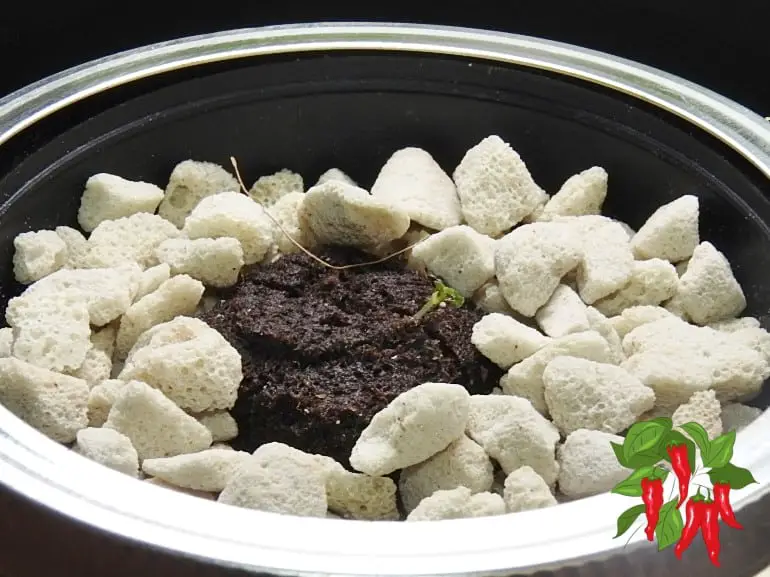
I just planted this buttercrunch lettuce seedling last night. It is tiny but it will grow.
Mason Jar Hydroponics How To Grow Lettuce In Mason Jars The Kratky Way
If you are not familiar with the Kratky method it is time to make it your friend. It is the simplest form of DWC hydroponics.
It uses no electricity. It is easy and cheap to set up. Did I mention you can grow lettuce and other greens like cilantro or basil in a mason jar?
It may seem incredible but it is actually true. In a small apartment but still want to grow some of your own food? Well, you are in the right place.
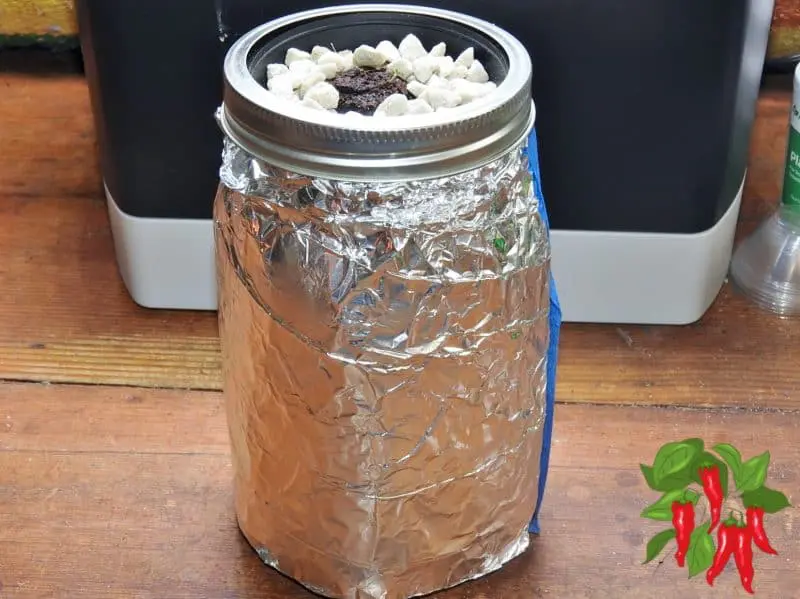
Here is my Kratky Method Mason Jar Lettuce. The lettuce plant is tiny right now. Don’t strain your eyes.
What Vegetables Can You Grow In Mason Jars?
The Kratky method works best for leafy greens like lettuce and herbs like cilantro or basil.
You cant grow tomatoes or peppers in a mason jar. They are too big and take too long.
What Is The Kratky Method Of Hydroponics?
The Kratky method is the simplest form of hydroponics. Roots are suspended in water and nutrients. The jar or reservoir is only filled once at the start of growing.
Feeder roots draw nutrients from the water. As the nutrient level drops the exposed roots become air roots supplying oxygen. This is why no pumps or airstones are needed.
The only drawback to the Kratky method is that you cant refill the container. If you do you will drown your air roots and kill the plant.
Here is an article I wrote that explains the Kratky method in more detail: https://indoorvegetablegrower.com/kratky-lettuce-kratky-method-hydroponic-system-diy/
But right now I am guessing you just want to know about DIY mason jar hydroponics, so let’s get started.
Mason Jar Hydroponics Material List
- You need a wide mouth quart mason jar.
- You will also need a 3 inch net pot.
- You need a lettuce seedling started in rockwool or Root Riot(or other sponge starter plug)
- You need some hydroton or other inert media to fill around the seedling
- Some hydroponic nutrients
- Tinfoil or dark paper to cover the outside of the jar
That’s it. No pumps or airstones. Growing lettuce in a mason jar is simplicity itself. So lets set up your Kratky mason jar.
Kratky Mason Jar Setup Step By Step
- You may want to start your lettuce ahead of setting up your mason jar. Start your seedling in an inert media like rockwool. I prefer Rapid Rooters They are sponge like material similar to what the AeroGardens use. Personally, I think rockwool holds too much water.
- Drop your 3 inch net pot into your jar. It fits perfectly in a wide mouth mason jar. Start filling your 1 quart wide mouth mason jar with water. You want the water level above the bottom of your net pot.
- You will want to add hydroponic nutrients into the water. I used the nutrients that came with my AeroGarden.
- You will fill around your seedling with hydroton, perlite, or any clean inert media.
- You don’t want the roots exposed to light so cover your mason jar. You can use tin foil, black plastic, or dark paper. Just make sure no light can get through it.
- That’s it just make sure it has enough light and stand back and watch it grow!
Mason Jar Hydroponics FAQs
What can you grow with Mason jar hydroponics?
A Mason jar Kratky system works best for compact, fast-growing plants. Loose-leaf lettuce, basil, cilantro, dill, arugula, and other small greens or herbs are good choices.
Large plants such as tomatoes and peppers need more root space, nutrients, and water than a quart jar can provide. Full-size heading lettuce will also perform better in a larger reservoir.
Is a quart Mason jar large enough for lettuce?
A quart Mason jar can grow loose-leaf lettuce, especially when you begin with an established transplant and harvest individual outer leaves. However, the small reservoir may run low before a large or heading variety reaches maturity.
My Buttercrunch lettuce grew and began forming a loose head, but it used nearly all the nutrient solution in the jar. I would use a larger container when the goal is to grow a full head of lettuce.
Can you refill a Mason jar Kratky system?
A traditional Kratky system uses a reservoir large enough to support the plant through harvest without refilling. A quart Mason jar may be too small to accomplish this with a mature lettuce plant.
If the solution becomes too low before harvest, partially top up the jar while preserving the humid air gap. Do not fill it back to its original level or submerge the established air roots.
How do you prevent algae in a hydroponic Mason jar?
Completely cover the outside of the jar with foil, dark paper, an opaque sleeve, or another material that blocks light. Pay attention to small gaps around the lid and net pot.
You can temporarily remove the covering when checking the solution level or looking at the roots. Replace it afterward so light does not continually reach the nutrient solution.
How much light does Mason jar lettuce need?
Lettuce needs strong, dependable light for compact growth. A very bright window may work, but an LED grow light usually provides more consistent results indoors.
Provide approximately 12 to 16 hours of light per day when using a grow light, followed by a dark period. Follow the light manufacturer’s recommended hanging distance and adjust it if the lettuce stretches, pales, or develops bleached leaf edges.
Mason Jar Hydroponics Update & Final Thoughts
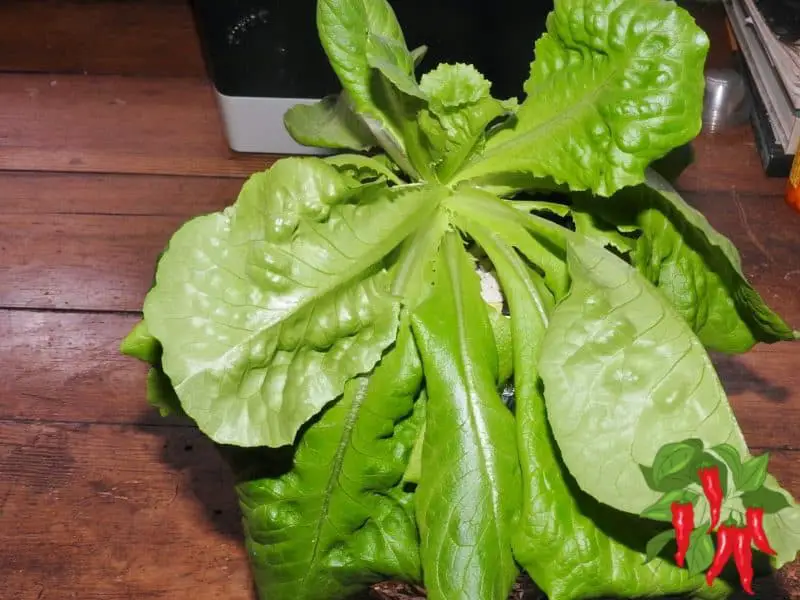
Here is my mason jar lettuce at 40 days. This is Butter Crunch which forms a loose head. This was started as a sprouted seed, and today it is forming a head.
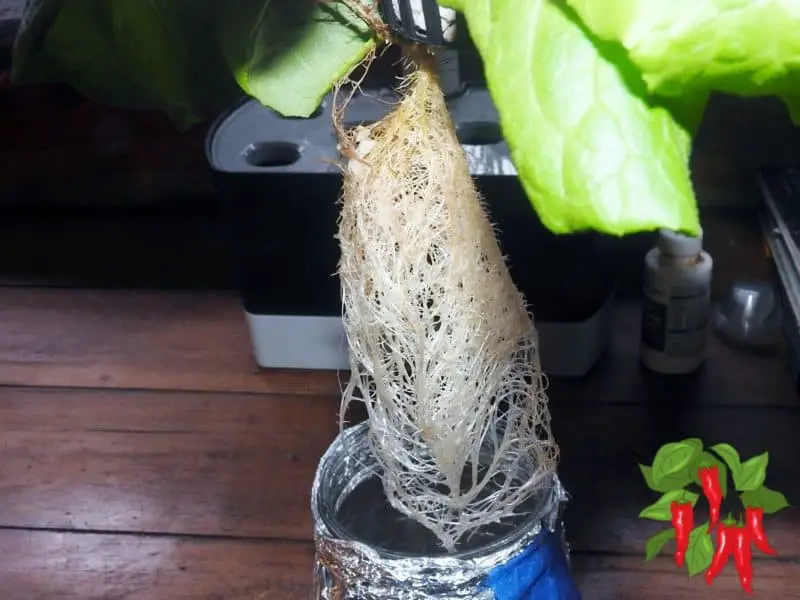
Here is a look at the roots. They had used up most of the water in the jar. So I did add a bit more.
So the Kratky method does work. However, this is a heading lettuce and the quart mason jar is really too small for it. Head lettuce takes about 2 weeks longer than leaf lettuce.
It should work fine for leaf lettuce or maybe head lettuce if you start with a transplant and not a just sprouted seed.
Otherwise, I think it would work better with a larger container. To be fair, this plant was not getting as much light as my other plants because it was on the edge of the light.
But if you want to grow Kratky lettuce I would suggest you use a tub because a one quart mason jar is really too small even for a single plant.
Learn about using a grow tent for vegetables
Here is some more info on the Kratky Method https://en.wikipedia.org/wiki/Kratky_method
💧 Indoor Hydroponic Gardens
Want fresh veggies year-round in small spaces? Explore beginner-friendly hydro systems, closet grow setups, self-watering hacks, and gear reviews that make indoor gardening simple.
-
- 🚪 How to Grow Vegetables in a Closet
- 🧰 How to Turn a Closet into a Grow Room
- 🏕️ Using a Grow Tent for Vegetables
- 🎪 Are Grow Tents Worth It for Vegetables?
- 🏢 Apartment Kitchen Garden: Smart Space Ideas
- 🏙️ Hydroponic Apartment Garden: How to Start
- 🥔 Growing Sweet Potatoes Indoors
- 🧱 Small Closet Grow Room Setup
- See all articles in our Indoor Hydroponic Gardens category
 Steve S. is the creator of